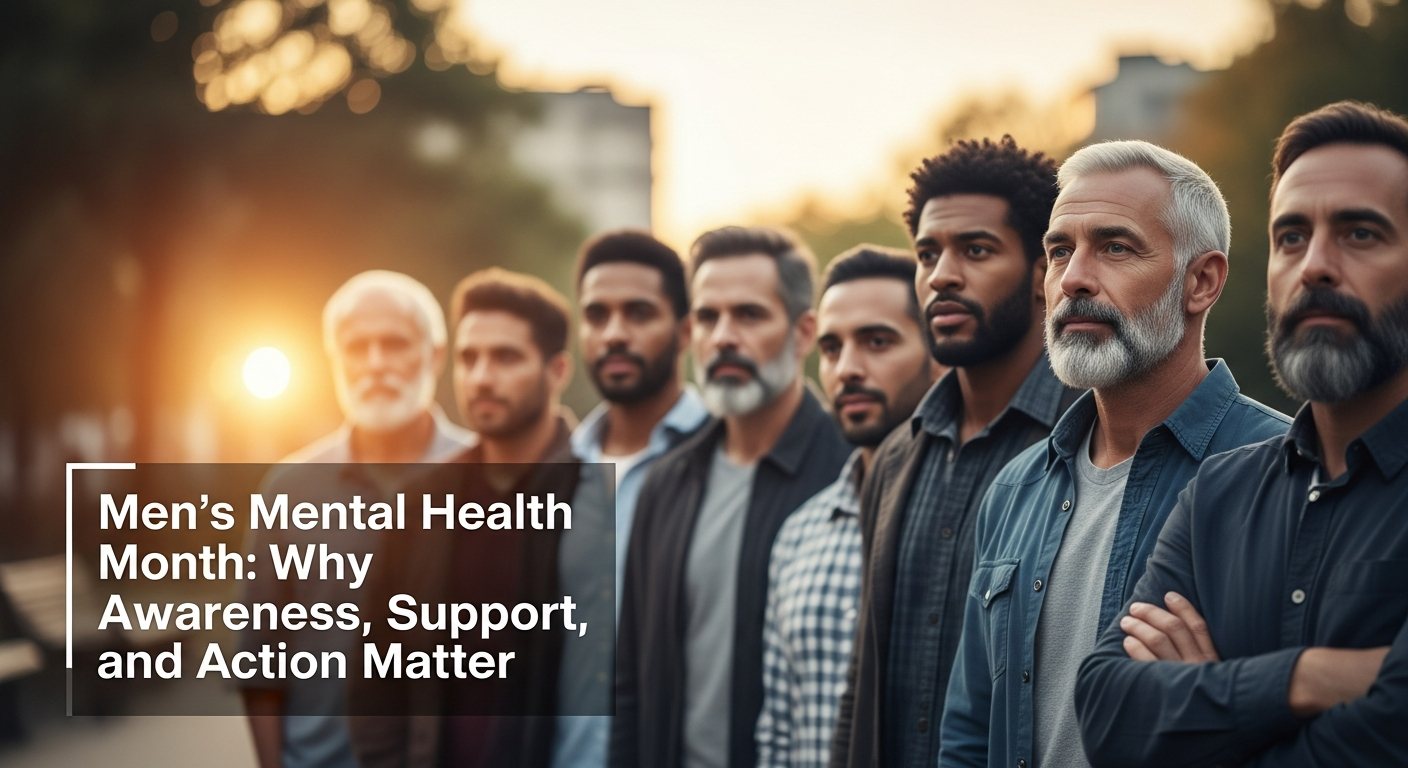
Men’s mental health month is observed every year to remind us that men struggle too. Many men feel pressure to stay strong and silent. This silence often leads to stress, sadness, and serious mental health issues. Society teaches men to hide emotions. Over time, this can cause harm. Men may avoid asking for help even when they need it most.
This awareness month shines a light on these struggles. It encourages open talks about feelings, stress, and mental well-being. Men’s mental health month is not about weakness. It is about honesty, growth, and healing. When men feel supported, families and communities grow stronger. Simple conversations can save lives.
Mental health affects how men think, work, and connect with others. Ignoring it does not make it go away. Learning, sharing, and caring are the first steps forward. This article explains why this month matters, what men face, and how everyone can help. Small actions can lead to powerful change.
What Is Men’s Mental Health Month?
Men’s mental health month is observed every June. Its goal is to raise awareness about mental health challenges faced by men. Many men experience anxiety, depression, and stress. Yet, they often suffer in silence. This month helps break that silence through education and open discussion.
The campaign focuses on prevention, early support, and reducing stigma. Men are often less likely to seek therapy or mental health care. Cultural expectations play a big role in this behavior. This awareness month encourages men to speak freely without shame.
Men’s mental health month also highlights available resources. It reminds men that help is normal and healthy. Communities, schools, and workplaces can use this time to promote emotional well-being. Awareness leads to understanding. Understanding leads to action. This month is a starting point, not the finish line.
Why Men’s Mental Health Is Often Ignored
Men’s mental health is often ignored due to long-standing social beliefs. Many boys grow up hearing phrases like “man up” or “don’t cry.” These messages teach emotional suppression. Over time, men learn to hide pain instead of expressing it.
This emotional pressure can lead to anger, burnout, or withdrawal. Some men turn to unhealthy coping methods. Others isolate themselves completely. Men’s mental health month helps challenge these harmful ideas. It shows that emotions are human, not weak.
Another issue is lack of awareness. Many men do not recognize mental health symptoms. They may think stress or sadness is normal. Without education, problems grow quietly. By talking openly, we create safer spaces. Men deserve understanding, compassion, and care just like anyone else.
Common Mental Health Challenges Men Face
Men experience many mental health challenges. Depression is one of the most common. It may not always look like sadness. In men, it often shows as anger, fatigue, or risky behavior. Anxiety is also common and can affect sleep and focus.
Stress from work, finances, or family expectations adds pressure. Many men feel responsible for providing and protecting others. This constant pressure can be overwhelming. Men’s mental health month brings attention to these silent struggles.
Substance misuse is another concern. Some men use alcohol or drugs to numb emotional pain. This often hides deeper issues. Without support, problems can worsen. Understanding these challenges helps men feel less alone. Awareness leads to early help and better outcomes.
Men’s Mental Health Month and Suicide Prevention
Suicide prevention is a critical focus of men’s mental health month. Men account for a high percentage of suicide deaths worldwide. Many never seek help before reaching a crisis point. This is why awareness is so important.
Talking openly about mental health can save lives. When men know they are not alone, hope grows. Simple check-ins can make a big difference. Listening without judgment builds trust and safety.
Men’s mental health month promotes education on warning signs. These may include withdrawal, mood changes, or risky actions. Encouraging professional help is vital. Therapy, counseling, and support groups work. Suicide prevention starts with conversation, compassion, and connection.
Breaking the Stigma Around Men’s Mental Health
Stigma is one of the biggest barriers to healing. Many men fear being judged if they open up. They worry about looking weak or unreliable. This fear keeps many silent. Men’s mental health month helps break this cycle.
Public conversations normalize mental health care. When leaders and public figures share their stories, it helps others feel safe. Vulnerability creates strength, not shame. Men need to hear that asking for help is brave.
Changing language also matters. We must replace judgment with empathy. Supporting mental health should be as normal as treating physical illness. Ending stigma takes time, but every voice helps. This month encourages that change.
How Society Can Better Support Men
Society plays a big role in men’s mental well-being. Support starts with education. Schools can teach boys emotional skills early. Workplaces can promote mental health programs and balance.
Families and friends should encourage open communication. Asking “How are you really feeling?” can open doors. Men’s mental health month reminds us that support should be ongoing.
Healthcare access is also key. Men need affordable, easy-to-reach mental health services. When systems support men, outcomes improve. Everyone benefits when men are healthy, heard, and supported.
The Role of Therapy and Counseling for Men
Therapy is a powerful tool for healing. Yet many men hesitate to try it. Some believe therapy is only for extreme problems. Others fear judgment. Men’s mental health month helps change these views.
Therapy offers a safe space to talk freely. It helps men understand emotions and build coping skills. Counseling can improve relationships, work performance, and self-confidence.
There are many therapy styles. Men can choose what feels right. Online therapy also makes access easier. Seeking help is not failure. It is self-respect. Normalizing therapy helps more men take that step.
Self-Care Tips for Men’s Mental Well-Being
Self-care is not selfish. It is necessary. Men’s mental health month promotes simple habits that support emotional health. Regular sleep, movement, and healthy food matter.
Talking to someone you trust helps release stress. Hobbies and downtime recharge the mind. Setting boundaries prevents burnout. These small steps add up.
Mindfulness and breathing exercises can reduce anxiety. Writing thoughts down can also help. Self-care looks different for everyone. The key is consistency. Caring for your mind is just as important as caring for your body.
How Men’s Mental Health Month Helps Communities
Men’s mental health month strengthens communities. When men feel supported, families thrive. Children benefit from emotionally healthy role models. Workplaces become more productive and positive.
Community events, workshops, and campaigns raise awareness. They create safe spaces for discussion. Men learn they are not alone in their struggles.
This month also encourages partnerships. Nonprofits, schools, and healthcare providers work together. Awareness builds connection. Connection builds resilience. Strong communities start with mental well-being.
FAQs About Men’s Mental Health Month
1. Why is men’s mental health month important?
Men’s mental health month highlights issues often ignored. It encourages men to seek help and talk openly.
2. When is men’s mental health month observed?
It is observed every year in June.
3. What mental health issues affect men most?
Common issues include depression, anxiety, stress, and substance misuse.
4. Why do men avoid mental health support?
Social stigma, fear of judgment, and lack of awareness are common reasons.
5. How can families support men’s mental health?
By listening, encouraging open talk, and supporting professional help.
6. Can therapy really help men?
Yes. Therapy helps men manage emotions, stress, and life challenges.
Conclusion: Turning Awareness Into Action
Men’s mental health month is more than a campaign. It is a call to care, listen, and act. Men deserve safe spaces to share emotions without fear. Awareness alone is not enough. Action creates change.
Start with conversations. Check in on the men around you. Encourage help when needed. Share resources and support systems. Mental health is a shared responsibility.
When men feel supported, everyone benefits. Let this month inspire year-round compassion. Together, we can build a healthier future—one honest conversation at a time.